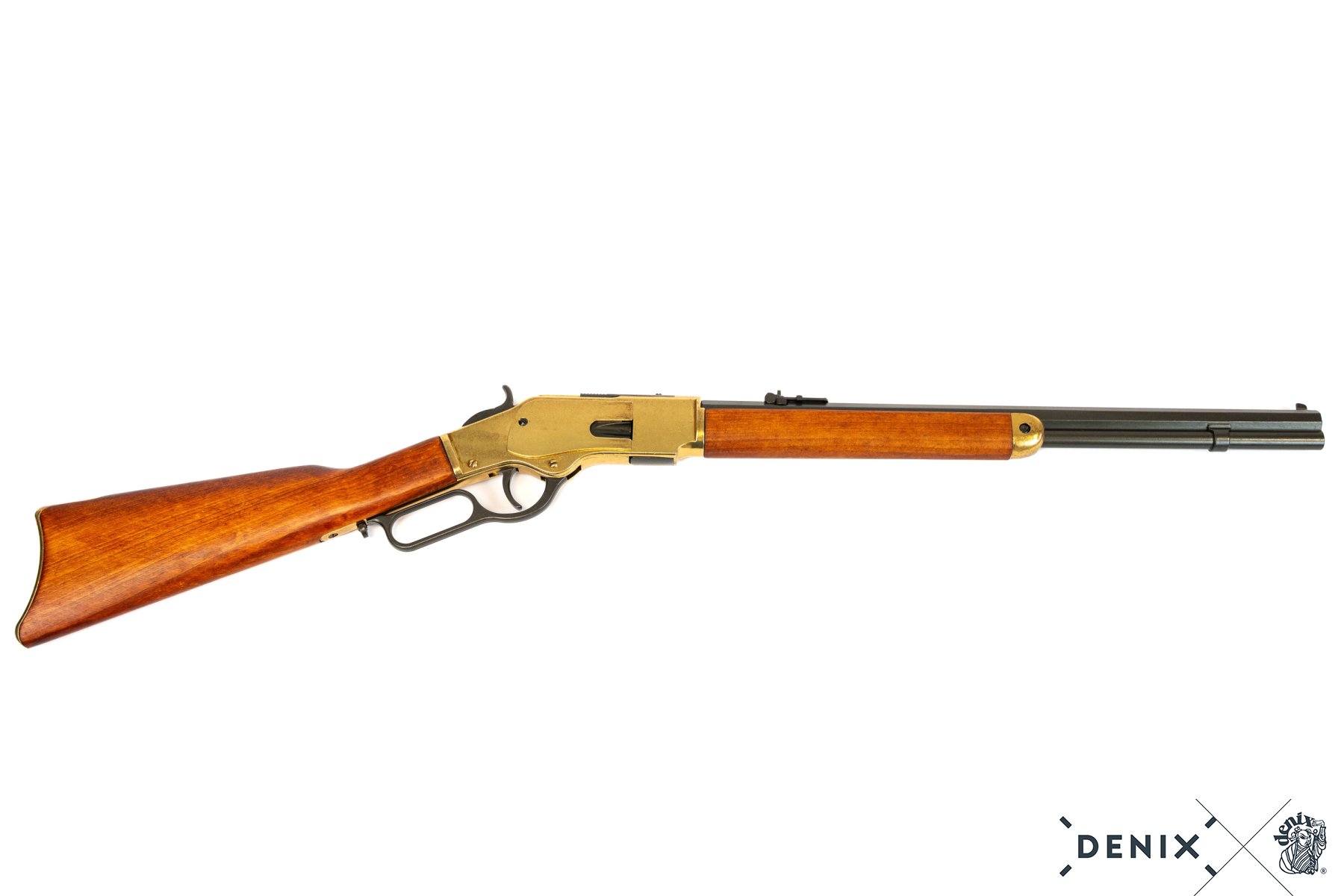
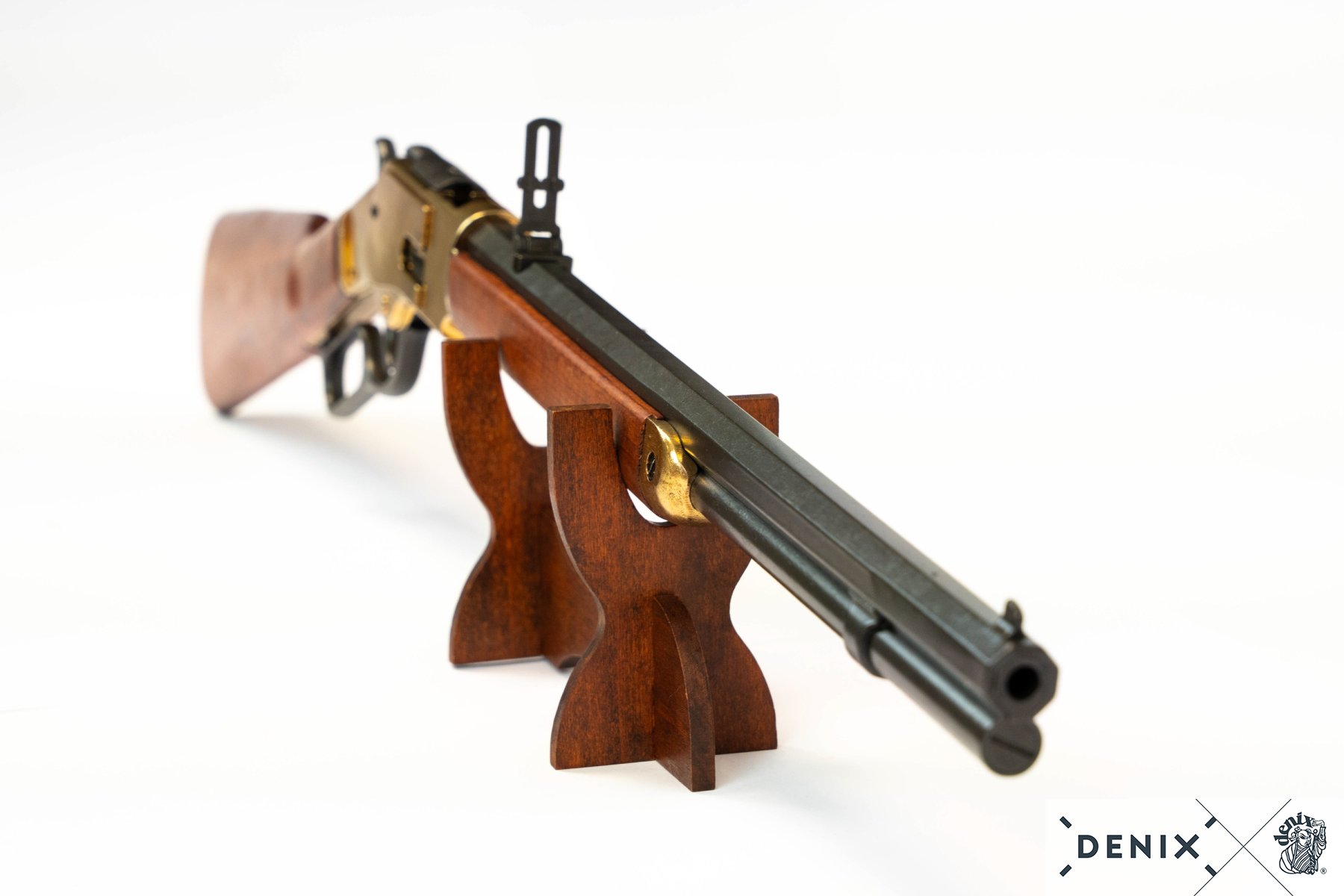
The legendary Winchester lever-action rifle, reproduced in metal and wood with moving mechanism.



The available products can be ordered by your gunsmith who will be delivered in 24 / 48h, out of stock products are being replenished, but your gunsmith may have in stock, ask!
DENIX offers reproductions of historical weapons inspired by major military periods and the conquest of the American West. Its decorative replicas in metal and wood reproduce the lines and some of the mechanisms of period weapons. The collection dedicated to the Wild West notably features lever-action rifles that marked the history of the United States in the 19th century.
The legendary Winchester lever-action rifle, reproduced in metal and wood with moving mechanism.
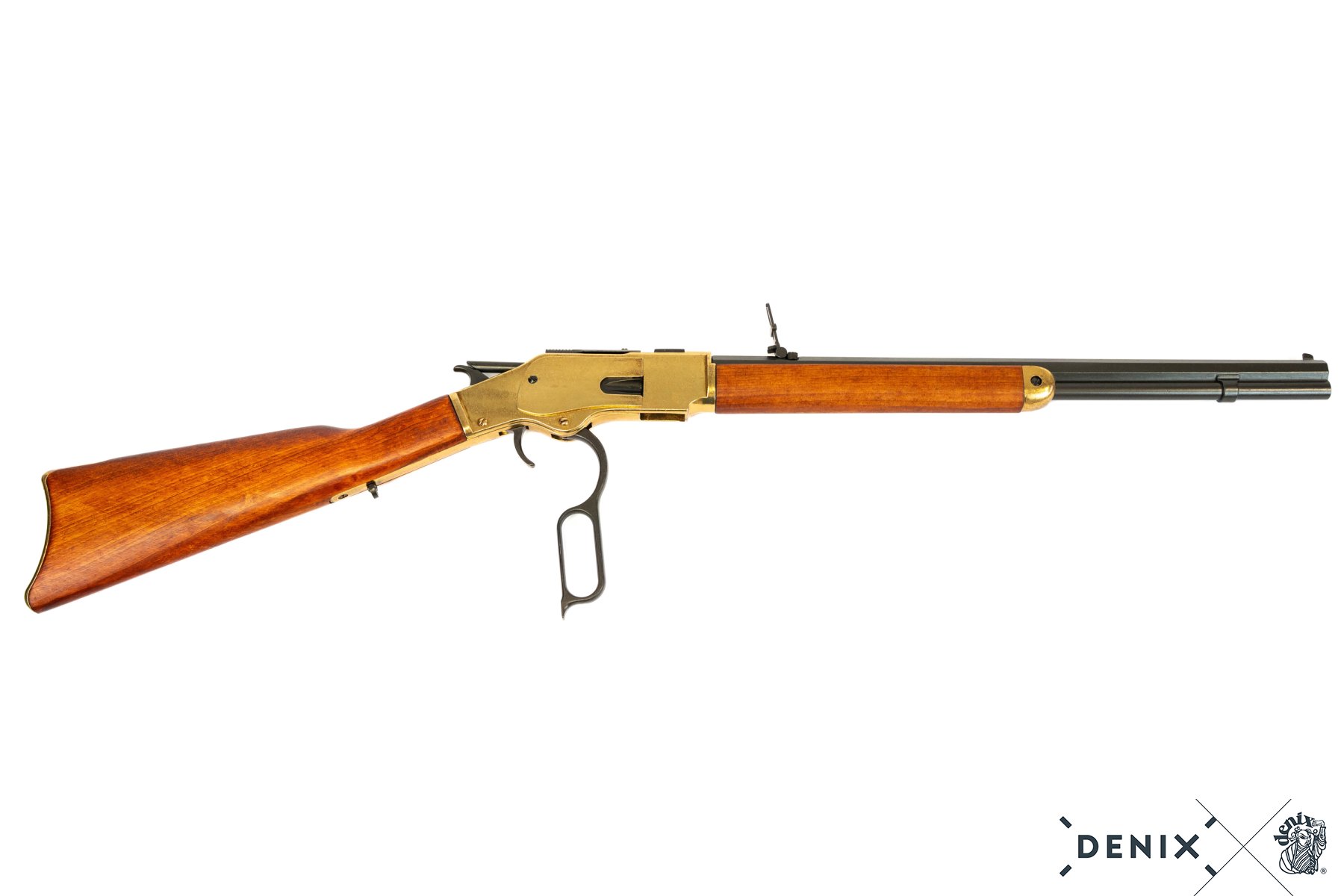
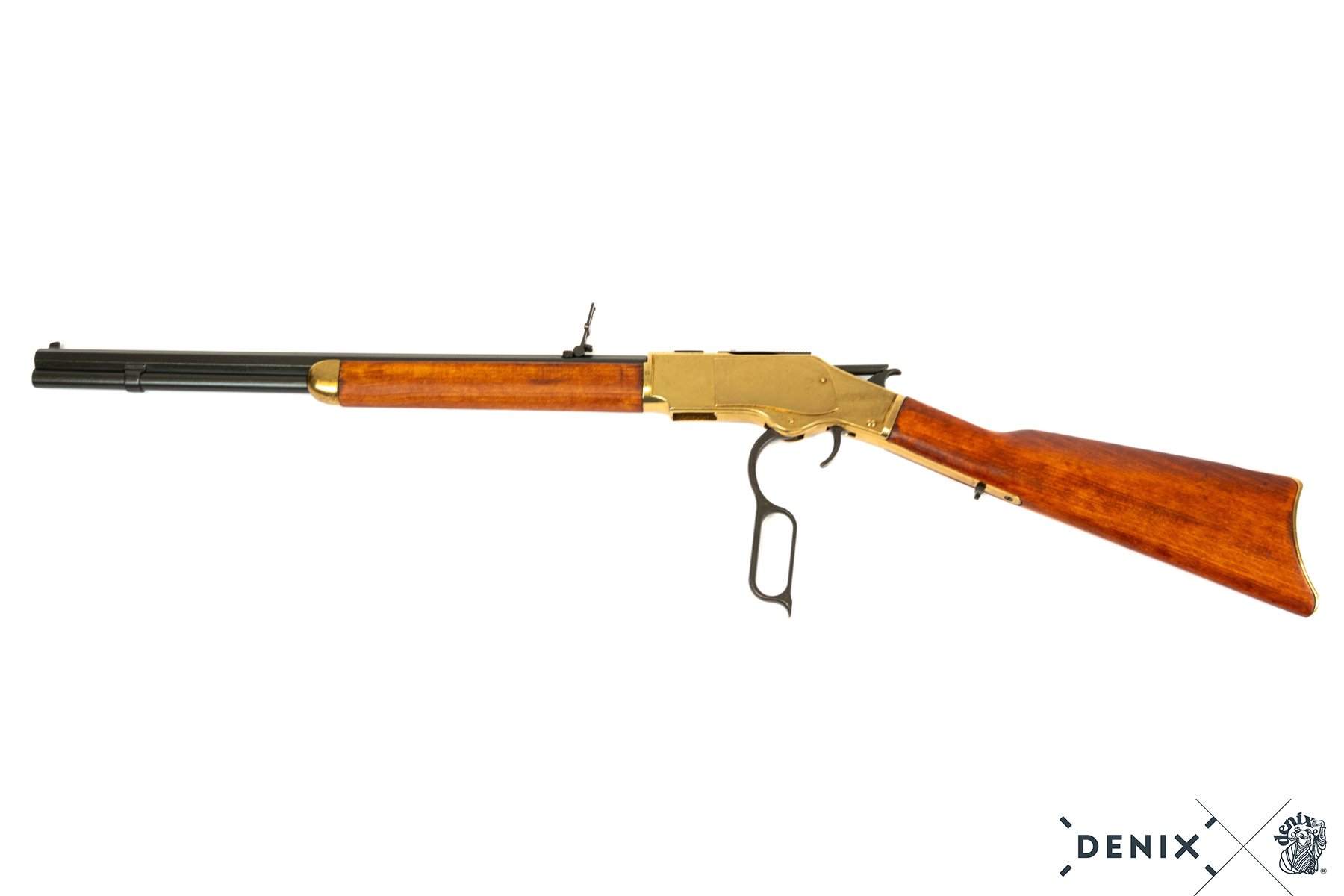
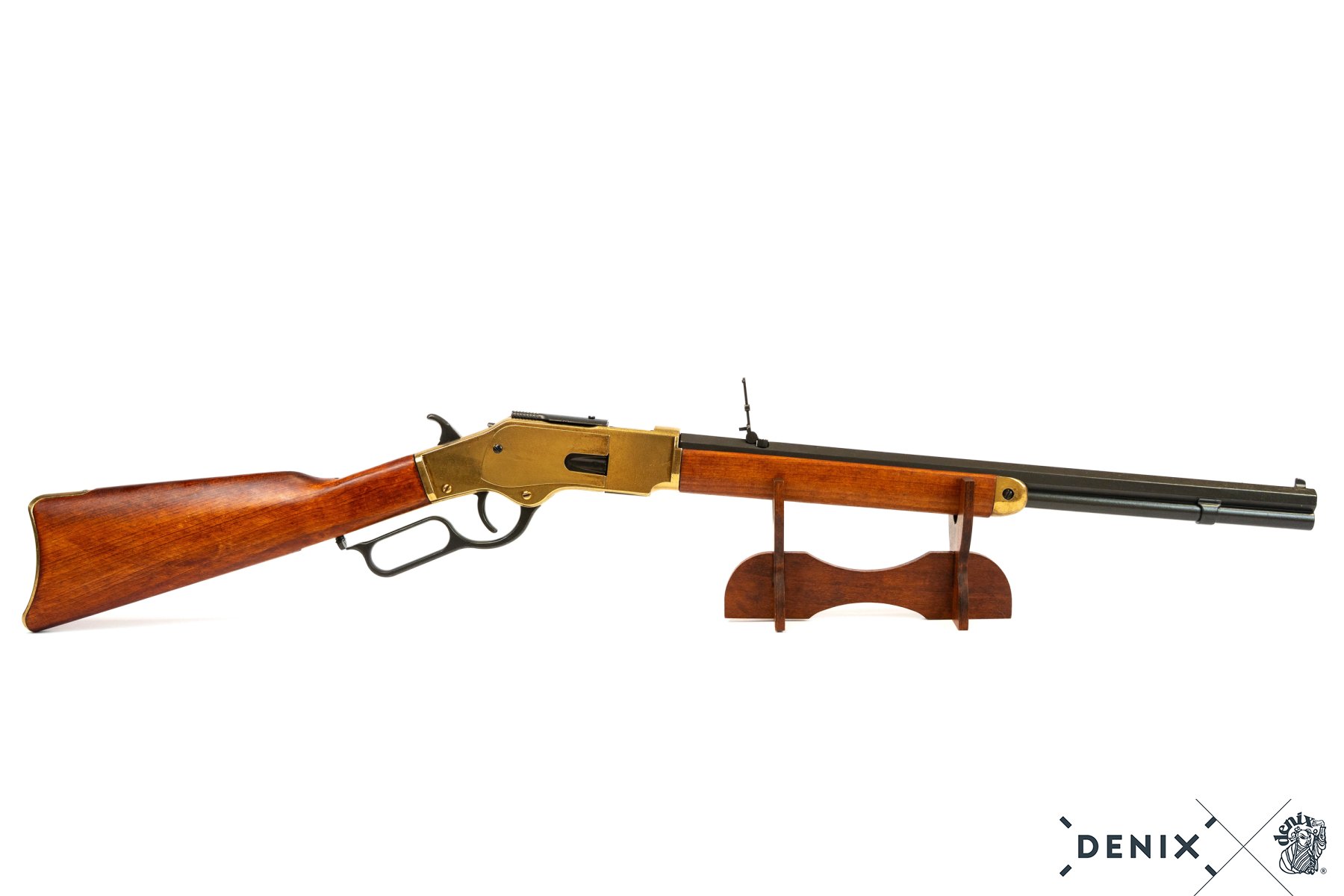
The DENIX Winchester 1873 rifle replica reproduces one of the most iconic weapons of the American West. Made of metal and wood , this 100cm replica features a moving trigger lever that simulates the loading and firing mechanism. A historical piece with simulated mechanical operation, it is intended for collectors, Western enthusiasts, and those interested in reenacting the Wild West.
- Brand: DENIX
- Reproduced model: Winchester Model 1873
- Type: Decorative replica of a repeating rifle
- Total length: 100 cm
- Weight: 2,590 g
- Materials: Metal and wood
- Reproduced system: Underlever
- Mechanism: Mechanical simulation of loading and firing
- Functionality: Non-functional replica, without firing capability
- Origin of the historical model: United States
- Year the model appeared: 1873
- Historical period: Conquest of the American West, 19th century
- Use: Collection, decoration and historical reenactment
Winchester 1873: the rifle that marked the conquest of the West
It is impossible to talk about the American Wild West without thinking of the silhouette of a Winchester lever-action rifle. Introduced in 1873, this repeating rifle has become one of the symbols of the American West, to the point of receiving the nickname " The Gun That Won the West ".
The DENIX replica of the Winchester 1873 captures the characteristic lines of this historic firearm: a long barrel, a wooden stock, and above all, the famous lever action that largely contributed to its reputation. At 100 cm in length , it replicates the dimensions of a period rifle, making it ideal for display in a collection dedicated to Westerns or American history.
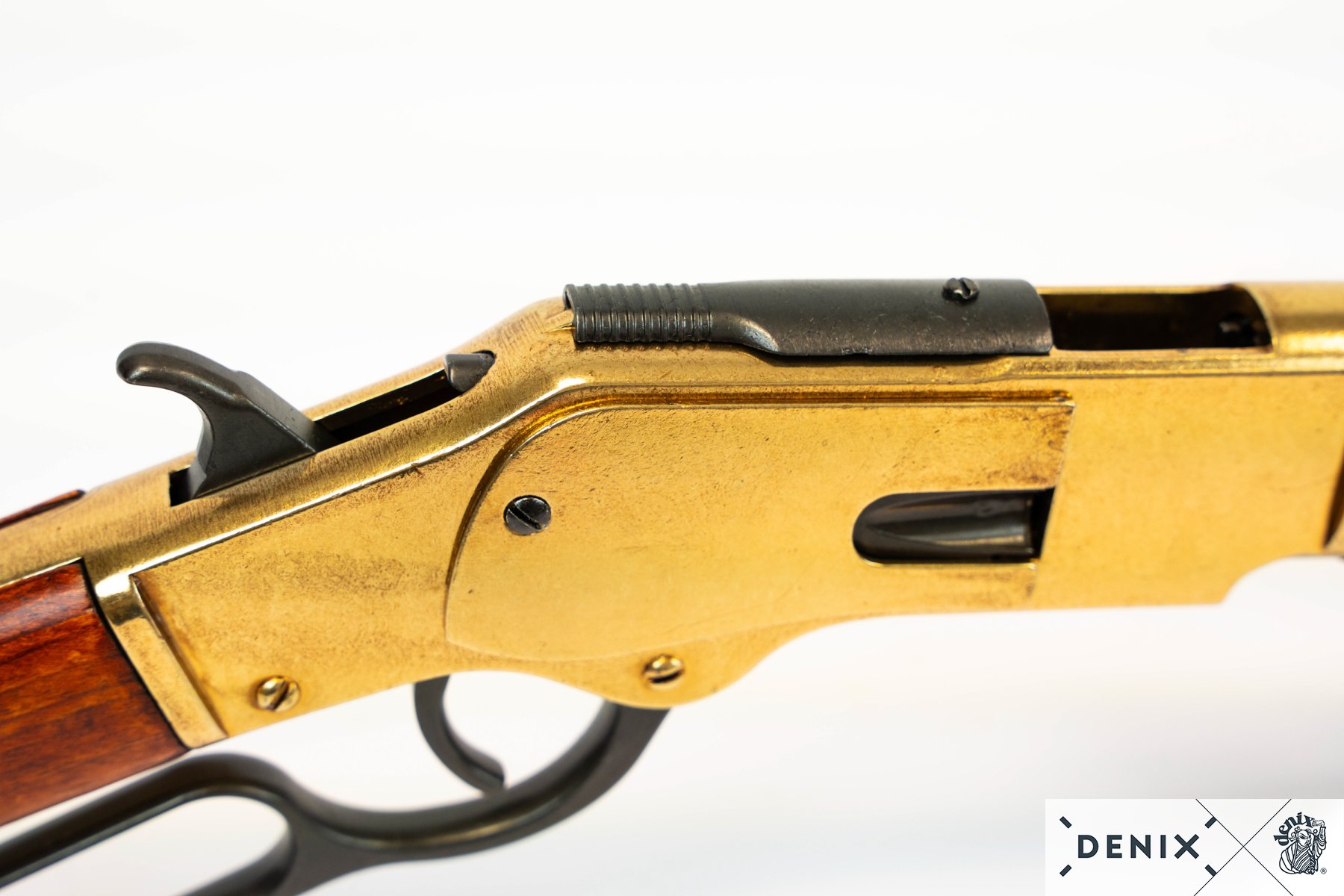
A mobile underguard lever faithful to the original principle
The distinctive feature of the Winchester Model 1873 lies in its lever-action repeating system . On the original weapon, this mechanism allowed for rapid-fire firing without manually reloading each cartridge into the chamber.
The lever's movement controlled the opening of the breechblock, the extraction of the spent cartridge case, and the transfer of a new cartridge from the tubular magazine. The lever's return then closed the mechanism and prepared the weapon for the next shot.
On this historical DENIX reproduction , the movable lever simulates this mechanical operation. It recreates the characteristic action of repeating rifles of the period, without allowing the use of ammunition or the firing of projectiles.
A metal and wood construction in the spirit of 19th century rifles
The construction combines metal elements with a wooden stock and forend , reflecting the combination of materials traditionally used on long guns of this period.
The wood finish recreates the aesthetics of vintage American rifles, while the metal parts replicate the architecture of the receiver and barrel. With a stated weight of 2,590 g , this replica possesses a substantial presence suitable for historical display.
These characteristics make it a particularly recognizable decorative object, whether displayed on a wall, in a collector's showcase or integrated into a scene dedicated to the American West.
A historic rifle associated with the rise of repeating firearms
The Winchester 1873 contributed to the spread of repeating rifles using centerfire metallic cartridges. At a time when single-shot weapons were still widespread, its lever-action mechanism allowed the chamber to be successively fed from a tubular magazine.
The original model was notably offered in calibers also used by some contemporary revolvers, including the .44-40 Winchester . This ability to use the same type of ammunition in a rifle and a handgun represented a significant logistical advantage for users owning both weapons in the same caliber.
The widespread adoption of the 1873 model by civilians and in the Western territories has permanently linked its image to that of American cowboys, ranchers, and pioneers.
An icon of the Western and American cinema
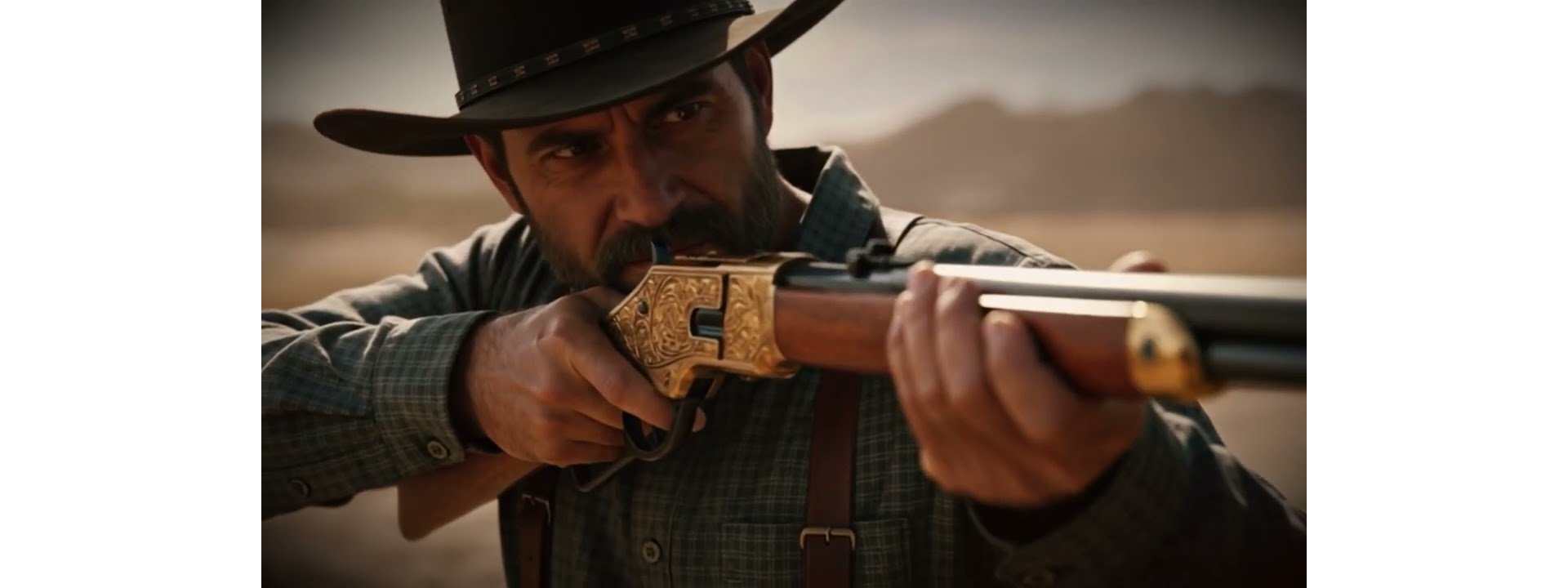
The Winchester's fame extends far beyond the realm of gunmaking. It also belongs to the imagination of the American Western , where lever-action rifles occupy a central place.
In 1950, director Anthony Mann even gave it a prominent role in the film Winchester '73 , starring James Stewart. The plot follows the journey of a particularly coveted rifle, illustrating the symbolic importance this model has acquired in popular culture.
This cinematic dimension enhances the appeal of the reproduction for fans of western films, collectors of historical objects, and enthusiasts of 19th-century America.
A reproduction intended for collecting and recreating the Wild West
In a saloon setting, an exhibition on the conquest of the West, or a collection of replica antique weapons , this rifle naturally finds its historical context.
Its simulated mechanism illustrates the principle of the underlever, while its metal and wood construction retains the overall appearance of the original model. It can therefore be used in educational presentations, to complement a collection of American militaria, or as a prop in a supervised historical reenactment.
This is a non-functional decorative replica , and not a real Winchester rifle capable of firing.
FAQ
Why is the Winchester 1873 nicknamed the gun that conquered the West?
This nickname stems from the Winchester 1873's strong association with the conquest of the American West. Its widespread use, repeating action, and presence in popular culture have made it one of the symbols of firearms used during that era. This expression is primarily a historical and commercial nickname, and not an assertion that a single weapon actually conquered the West.
What is the difference between an original Winchester 1873 and its DENIX reproduction?
The original Winchester 1873 is a genuine repeating rifle that uses metallic cartridges. The DENIX replica is a decorative object that replicates its appearance and simulates certain mechanical functions. It does not possess the ballistic capabilities of the historical firearm and cannot fire projectiles.
Is this Winchester replica suitable for a Western reenactment?
Yes, its historical silhouette, its metal and wood materials, and its movable lever allow it to be included in a presentation or reenactment dedicated to the Wild West. However, its use at an event must comply with the organizer's safety instructions and the rules applicable to the transport and public display of replica weapons.

Pictures are not contractual. Photos of product may be different with the final products.
Texts, brands and characteristics are not contractual as they are liable to change depending on arrivals.